
Chippewa County Criminal Docket Searches
Minnesota Court Records Online, or MCRO, is the public route to a Chippewa County criminal docket. Case Search accepts a case number. It also takes a citation number, an attorney or bar number, and other public case details. The cleanest key is a full case number. Local criminal numbers begin with county code 12, for example 12-CR-26-____. A citation number may exist first. The court assigns the case number later.
A plain defendant-name search will not surface a pending criminal matter. The Judicial Branch states this plainly. Pending criminal cases are not available through ordinary MCRO name search. When a record is old, restricted, or simply absent online, try a public terminal at any Minnesota courthouse or ask Chippewa County District Court administration. Remember what MCRO is. It is the public lookup layer; Minnesota eFile and eServe handles filings and service, not docket searching.
- Open MCRO Case Search and enter the complete case number, citation number, or other supported public identifier.
- Use the county filter and confirm that the case is in Chippewa County before treating a result as the right file.
- Open Case Details and compare the case type, filing date, status, and party role with the information already known.
- Read the separate Charges, Events, Hearings, Disposition, Financial Information, and Judgment Details areas rather than treating one line as the whole case.
- For a certified copy, a paper file, or a record that is not remotely available, contact court administration instead of relying on a screen image.
Note: The county Recorder office keeps land and vital records. It does not hold a Chippewa County criminal docket.
Chippewa County Criminal Case Numbers
In the local formats, the first two digits identify Chippewa County. The CR segment marks a criminal case. A traffic or payable-violation matter may carry a different court case type. Keep the citation number and the court case number side by side when you have both. Each answers a different stage of the same matter. The citation is the law-enforcement document. The Register of Actions starts once the court file is created.
A new citation may not appear in MCRO right away. The Court Payment Center advises allowing up to seven days for court filing. After that, confirm the citation or case number. Check with the local court or the payment center. A missing result does not mean the matter was dismissed, voided, or routed elsewhere.
For the state’s criminal classification terms, Minnesota's official criminal-classifications statute shows the definitions. The docket draws on them.
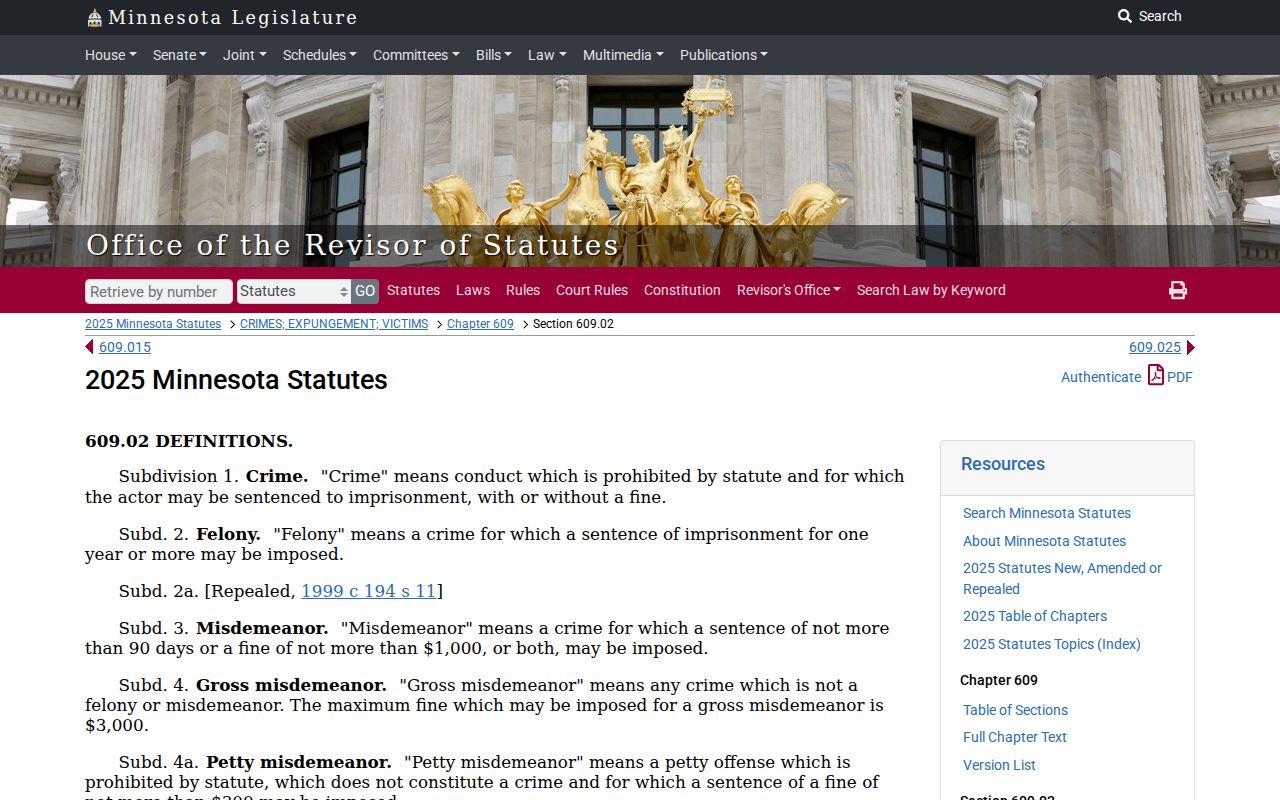
Those labels describe alleged offense levels. Still, the record’s dates, charges, and disposition do the real work of explaining a Chippewa County criminal docket.
Criminal Dockets: What They Show
MCRO Case Details breaks the criminal Register of Actions into connected record areas. Case Information may list the court location. It may also give the judicial officer, status, citation number, flags, and related cases. Criminal files can also show party roles and attorneys. Charges and amendments, interim conditions, assignments, bond or bail activity, and financial entries may appear too. Events run in reverse date order. A document index number may tie an event to a public document. That tie appears only where a view control allows it.
| Case number | The court identifier, such as the observed 12-CR-26-____ pattern, rather than a citation number alone. |
|---|---|
| Charges | Alleged offenses, charge text, and any amended-charge history. A charge is not a conviction. |
| Events | Reverse-chronological entries for filings, notices, orders, and hearing results, sometimes with a document index. |
| Hearings | Upcoming and previous scheduled proceedings, which are distinct from a final disposition. |
| Disposition and judgment | The recorded outcome and any later judgment or financial detail, read together with the dated event history. |
An active-warrant flag is not a warrant search. The training specimen notes the flag can stem from this case or another. Similarly, a closed status can sit alongside a balance due, a judgment detail, or a later credit entry.
Chippewa County Criminal Offense Terms
Section 609.02 defines the broad Minnesota labels. The four are felony, gross misdemeanor, misdemeanor, and petty misdemeanor. A classification can shape procedure. It can also decide whether a citation route is open. Yet the label alone never settles what happened in a given Chippewa County case. For that, read the charge text, amendment history, plea, disposition, and sentencing entries by date.
- Charge
- An alleged offense recorded in the criminal case. It is not a finding of guilt.
- Amended charge
- A later change to the charge record. Compare its date with the disposition.
- Disposition
- The court-recorded outcome, which may include dismissal, plea, conviction, or another result.
- Sentencing
- The penalty or order stage after a criminal disposition; the event history or order supplies the details.
A calendar event, such as an initial appearance or bail hearing, is only a scheduled proceeding. It establishes no conviction, no final conditions of release, and no sentence.
Criminal Case Stages on the Docket
A Chippewa County criminal Register of Actions can open with a citation, complaint, or other charging document. Later entries may show an initial appearance. Pre-trial proceedings, a plea or trial, a disposition, and sentencing may follow too. No file follows every step. A dismissal can change what the later record means. So can an amended charge, a continued hearing, or a separate judgment entry.
Docket flow: Filing → Arraignment or Initial Appearance → Pretrial → Plea or Trial → Disposition → Sentencing
For the hearing schedule, the official daily calendar and MCRO Hearing Search can show an upcoming setting. The full sequence and public outcome live in Case Details, not in a calendar line.
Chippewa County Criminal Citation Timing
A payable citation and a mandatory appearance are different paths. The Minnesota Court Payment Center answers eligible citation questions. A criminal case requiring an appearance cannot just be paid through that route. Under the court’s traffic guidance, paying an eligible payable offense counts as a guilty plea. It also counts as a conviction. Read the citation’s instructions before choosing a response.
For a recent citation, wait through the stated filing period. Do not assume the statewide system missed it. Call the Court Payment Center at (651) 281-3219 in the metro area. Elsewhere, call (800) 657-3611. Court administration can then help identify the proper local file.
Chippewa County Criminal Docket Courts
Chippewa County District Court keeps the county's criminal case records. It is part of Minnesota's Eighth Judicial District. There is no separate county-level municipal or justice-court criminal docket here. Minnesota district court handles that work directly. Court Administrator Lindsay Listul is the public contact for the court. One more distinction matters. The Minnesota Court of Appeals sits above the trial courts. Its opinions do not surface in an ordinary district-court case lookup.
Court administration holds the case file and the Register of Actions. It also keeps the calendar and the copy process. Two statewide tools cover electronic access to public portions. Those are MCRO and the public terminals at the courthouse. Other offices appear in criminal matters from time to time. A county attorney, the sheriff, or a corrections agency may take part in a case. None of them maintains the district-court criminal docket itself. Record requests go to court administration.
Chippewa County Criminal Record Requests
Know what to ask for before you contact the clerk. The more precise the request, the faster it moves. Give the full case or citation number, the county, and a rough filing or incident date. Then name the exact item you want, such as a complaint, an order, a Register of Actions, a judgment, a sentencing document, or payment history. Say whether you want to inspect the record or receive a copy. Copies come uncertified, certified, or exemplified. Confidential, sealed, juvenile, or expunged files call for extra care. Flag that problem first. Do not send sensitive details into the dark.
Chippewa County District Court Administration
629 North 11th Street
Montevideo, MN 56265
Phone: (320) 269-7774
Fax: (320) 269-7733
Ask about file location, a public terminal, the copy route, certification, or current fees.
For the mechanics, the statewide copy-request instructions walk through four ways in: online, in person, by mail, and through eFile. One caution applies here. eFile is an authorized filing route only, not a tool for searching Chippewa County court records. The county offers no dedicated criminal-docket email address, drop box, or subscription service for these requests.
Access Rules for Criminal Dockets
Access starts from a simple premise. Under the Minnesota Judicial Branch Rules of Public Access, judicial-branch case records are open unless a statute, rule, order, or other authority makes them nonpublic. The rules also draw a line between remote access and courthouse access. A record can sit in the public view at a court location even while MCRO keeps it off the internet, so a trip to the courthouse still matters for some Chippewa County files.
Key rules and statutes:
Public Access Rules 4 and 8 describe general accessibility and distinguish inspection, copies, terminals, and remote access.
Minnesota Statutes section 13.03 supplies a public-data presumption, free inspection, and a copy-cost framework where it applies.
Minnesota Statutes section 609A.03 provides the petition and notice framework for qualifying expungement requests.
A no-result search is not proof that a person has no court record. It can reflect restricted access, a paper file, a name variation, or expungement. For a confidential or sealed court record, use the CON100/CON101 request route with the court that holds the file.
Minnesota’s expungement statute is the source for this record-access illustration.
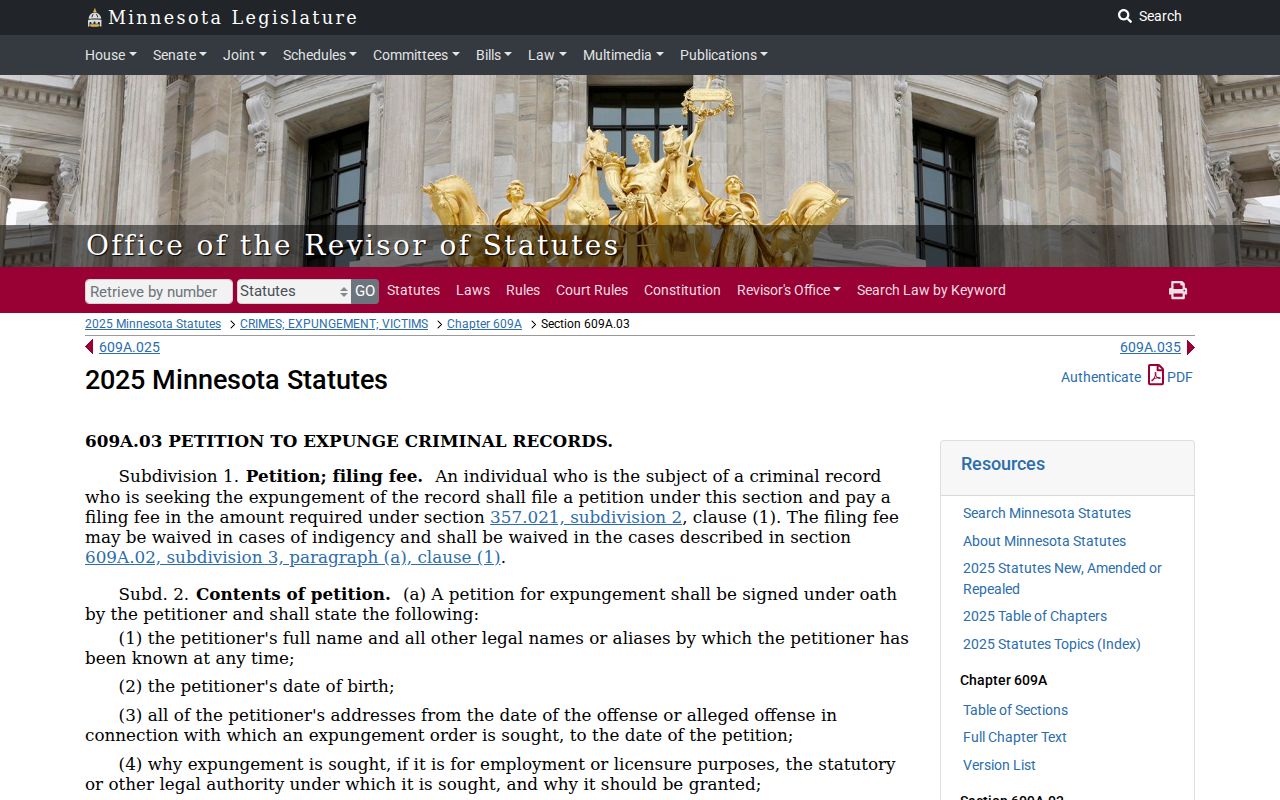
Expungement changes what the public can see in a docket. But an empty MCRO result, on its own, proves nothing about whether a record was expunged.
Chippewa County Criminal Juvenile Limits
Juvenile delinquency material is not an ordinary adult criminal-docket search. Minnesota statutes give juvenile hearings and records distinct confidentiality rules and exceptions. Case type, age, document type, service status, and a court order can affect what is visible. The Judicial Branch’s MCRO accessible case-types handout also identifies public, restricted, and unavailable-online categories. Do not publish juvenile identities, protected addresses, victim information, medical details, or sealed exhibits from a court record.
Minnesota’s juvenile-hearing statute provides the source for the first juvenile access illustration.
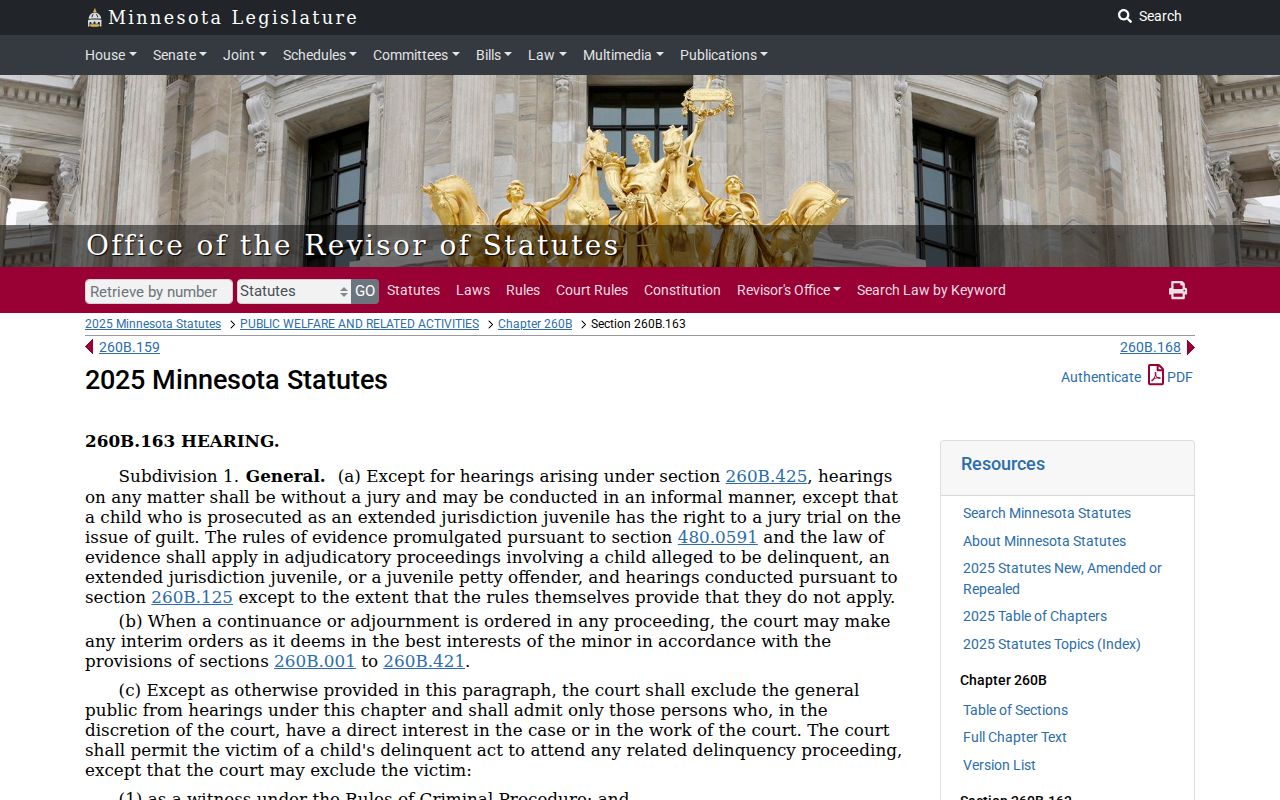
That hearing rule only tells half the story. Read it beside the record rule and the case details the court itself lists. Minnesota's juvenile-record statute governs which juvenile court records stay private and which the clerk can release.
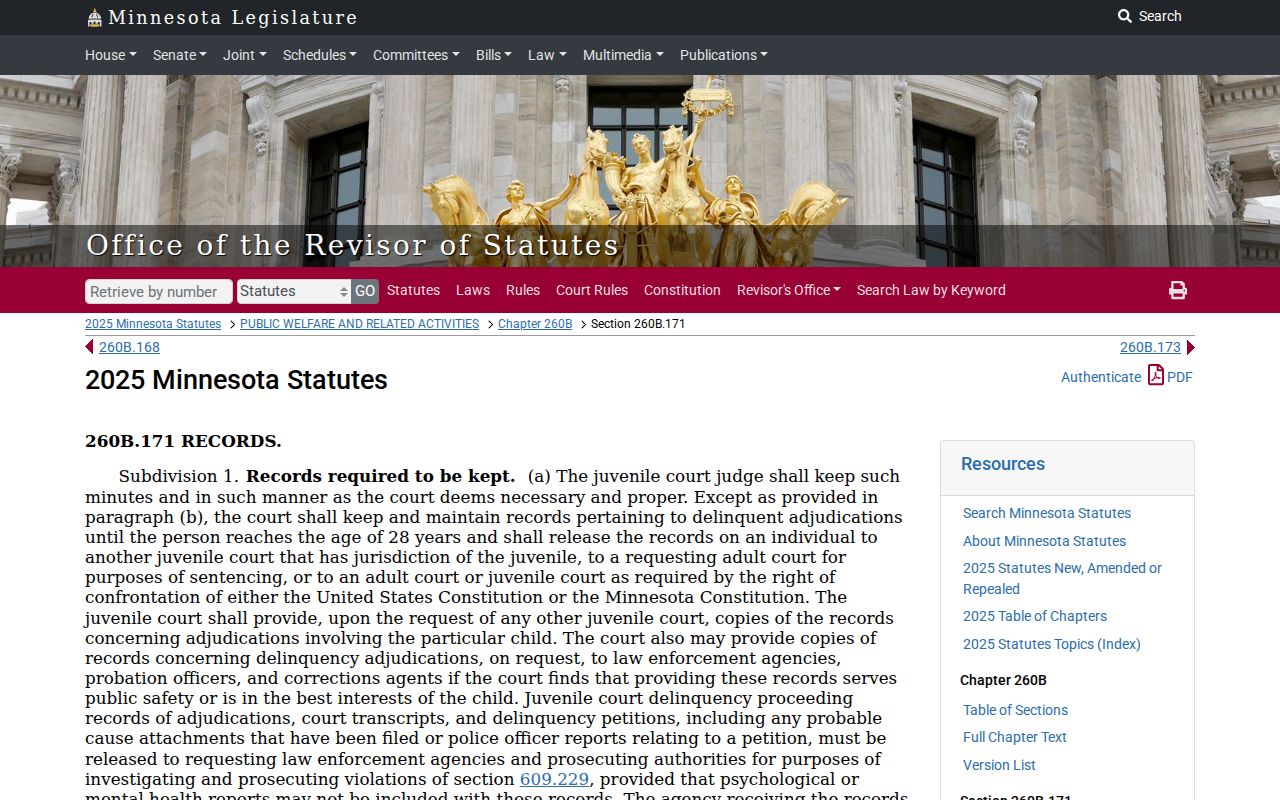
A requested record may be confidential or sealed. In that case, court administration can point you to the right form or the authorized access route, though it cannot give legal advice.