
Chippewa County Civil Docket Searches
Minnesota Court Records Online is the public search tool for Chippewa County civil dockets. Enter the full case number first if you have it. No number? An exact party name works. Add the Civil category, pick Chippewa County, and set a filing-date range when you can. Grab the whole case number from your result. The document side of MCRO will not open without one.
What MCRO shows is public case information, events, hearing details, judgments, and some documents. Coverage is not total, though. Historic files, sealed matters, and restricted records may sit outside remote access. A search that returns nothing might mean a name variation. It could also point to an old paper file or a privacy limit, not the absence of a case. Need a complete file, a certified judgment, or a document that will not open? Call district court administration. You can also use a public terminal at any Minnesota courthouse.
- Open MCRO Case Search and select the Chippewa County filter with the Civil category where appropriate.
- Search by complete case number, or enter the party name and then refine by date and category.
- Confirm the case title, filing date, court location, and party roles before opening Case Details.
- Read the events, hearings, disposition, judgment details, and financial information as separate record areas.
- Use the exact case number for a document search or a copy request when the public result does not contain the needed document.
Field meanings and wider search options are laid out in the Chippewa County docket search resources.
Chippewa County Civil Court Authority
Chippewa County District Court, Minnesota Eighth Judicial District handles civil matters locally. Its administration keeps the case files, Registers of Actions, calendars, and copy requests. The court administrator is Lindsay Listul. No separate county clerk of court is listed. State law places civil jurisdiction with the district courts as part of their trial role.
Do not confuse these records with county offices. The Recorder holds real-estate and vital records. A city clerk keeps municipal minutes. Neither office carries a current Chippewa County civil case file. Minnesota Statutes section 484.01 shows the statute behind district-court jurisdiction.
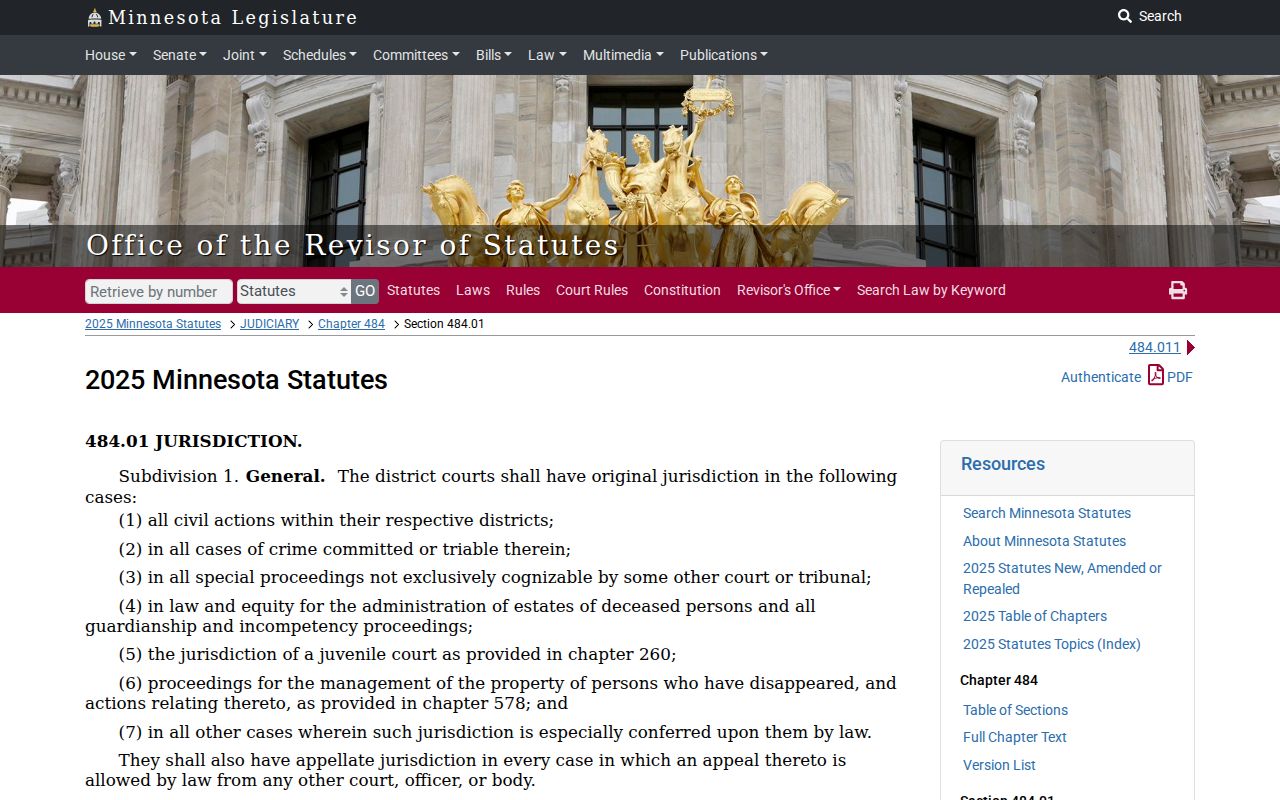
That jurisdiction rule explains the routing. Civil records in Chippewa County run through district court administration and MCRO, not through county or city offices.
Civil Dockets: What They Show
A Chippewa County civil Register of Actions is a timeline of events. It is not the text of every filing. Case Details carries the basics: case title, category, filing date, venue, judicial officer, and status. It also lists parties and their roles, attorney information, related-case references, and hearings. Each event usually lists a description and a date. Some also show a document index number or a view-document control. Expect the list to run newest first.
| Case number | The court-assigned identifier for the civil file, used for record requests and MCRO Document Search. |
|---|---|
| Parties and attorneys | Roles such as plaintiff, defendant, petitioner, or respondent, plus available attorney information. |
| Events and documents | Dated filings, notices, orders, and document index numbers. A link is not guaranteed for every event. |
| Hearings | Upcoming or prior settings, their type, and other calendar information where public. |
| Judgment and satisfaction | A recorded judgment, monetary award, later payment activity, or satisfaction entry. These answer different questions. |
Read entries with care. A plaintiff's filing is an allegation, nothing more. A settlement conference on the calendar proves only that a conference was scheduled. A default hearing alone does not establish final judgment.
Chippewa County Civil Document Links
An event in a Chippewa County civil Register of Actions can carry a document index number and a control to view a public document. The two are not the same thing. The index shows a document exists for that event. The view link appears only when that document is open to remote access. An event can stay on the docket even with no online link to its filing.
MCRO Document Search asks for the court case number. It returns public documents tied to that case. Many public civil and criminal documents are online under current Judicial Branch guidance. That covers filings dated on or after July 1, 2015, subject to case-type and access rules. Older paper files, confidential records, and some family documents may still need a courthouse terminal. A request to court administration is the other route. Any remote image is unofficial; certification comes from the court.
When an event shows no document link, note the case number and event date. Then ask the court about a copy or certification. A missing link never means the event failed to happen.
Chippewa County Conciliation Dockets
Conciliation Court is Minnesota's small-claims division inside district court, not a freestanding Chippewa County courthouse. A Conciliation Hearing on the local schedule marks a small-claims setting. That listing alone does not give the claim's result. The court file and later events supply the context. MCRO plus district court administration offer the same access chain used for other district-court civil dockets.
Minnesota Statutes section 491A.01 establishes the conciliation division. Its monetary scope and claim-specific rules shift over time. The current statute and court forms are the place to check a present threshold. Several subjects are excluded from this court. The list includes title to real estate, defamation, specific performance, class actions, injunctions, many family and juvenile matters, probate, and eviction proceedings.
The Conciliation Court statute lays out the division, its limits, and the claims it cannot take.
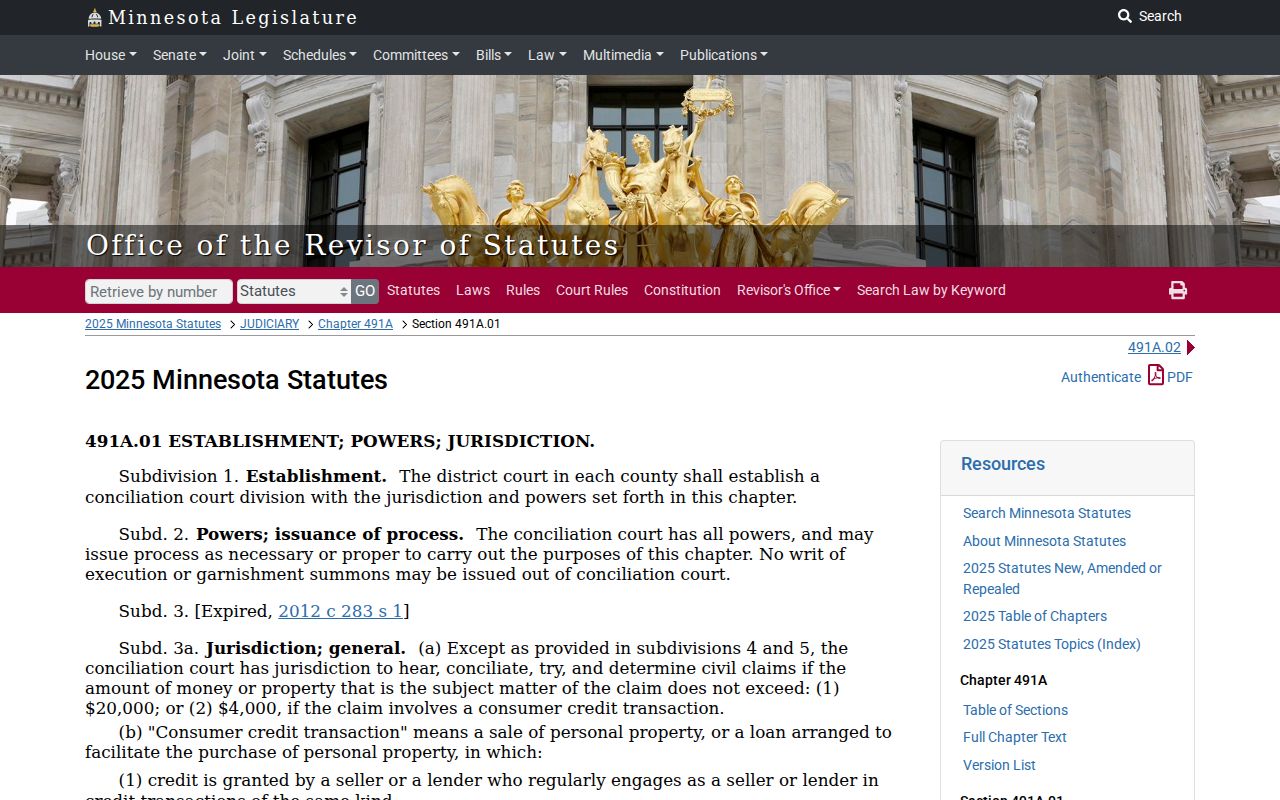
Those exclusions matter for readers of a civil docket. A case cannot be labeled conciliation from a broad civil description alone.
What Cases Fill the Civil Docket
The Chippewa County civil docket covers a wide mix of matters. Ordinary civil actions sit alongside conciliation claims, name changes, judgments, and appeals or removals. Other statutory proceedings appear here too. MCRO adds related family and probate categories. Document visibility there can differ from ordinary civil files. Guessing a case type from a party name or calendar label is risky. Read the Case Details page instead.
- Ordinary civil actions and the motions or judgment entries connected with them.
- Conciliation Court matters that fit the division’s current authority and exclusions.
- Name-change proceedings and public orders where access rules permit.
- Judgment-related records, monetary awards, and satisfaction activity.
- Other civil statutory proceedings, with separate rules for family, probate, mental-health, and juvenile material.
In family cases, the court's own orders and judgments tend to be the records you can reach, while papers filed by the parties may not be. A case listed for the public does not tell you every filing inside it can be pulled up from afar.
Chippewa County Civil Copy Fees
Fees for filings and copies in Chippewa County come from the Chippewa district-court fee table. Read the fine print. Base charges leave out county law-library fees, and a waiver might apply to you. Ask court administration, or check the live table, before you pay. That matters most with mixed requests. One request may combine a filing, a certified copy, or an odd delivery choice.
| Listed service | Fee |
|---|---|
| First civil paper | $310 |
| Civil motion | $100 |
| Jury with first paper / later jury request | $410 / $100 |
| Subpoena, per name | $16 |
| Conciliation first paper / name change | $65 / $310 |
| Uncertified / certified / exemplified plus certified copy | $0 / $14 / $28 |
The county-specific fee table supplies the source illustration for these civil docket fee choices.
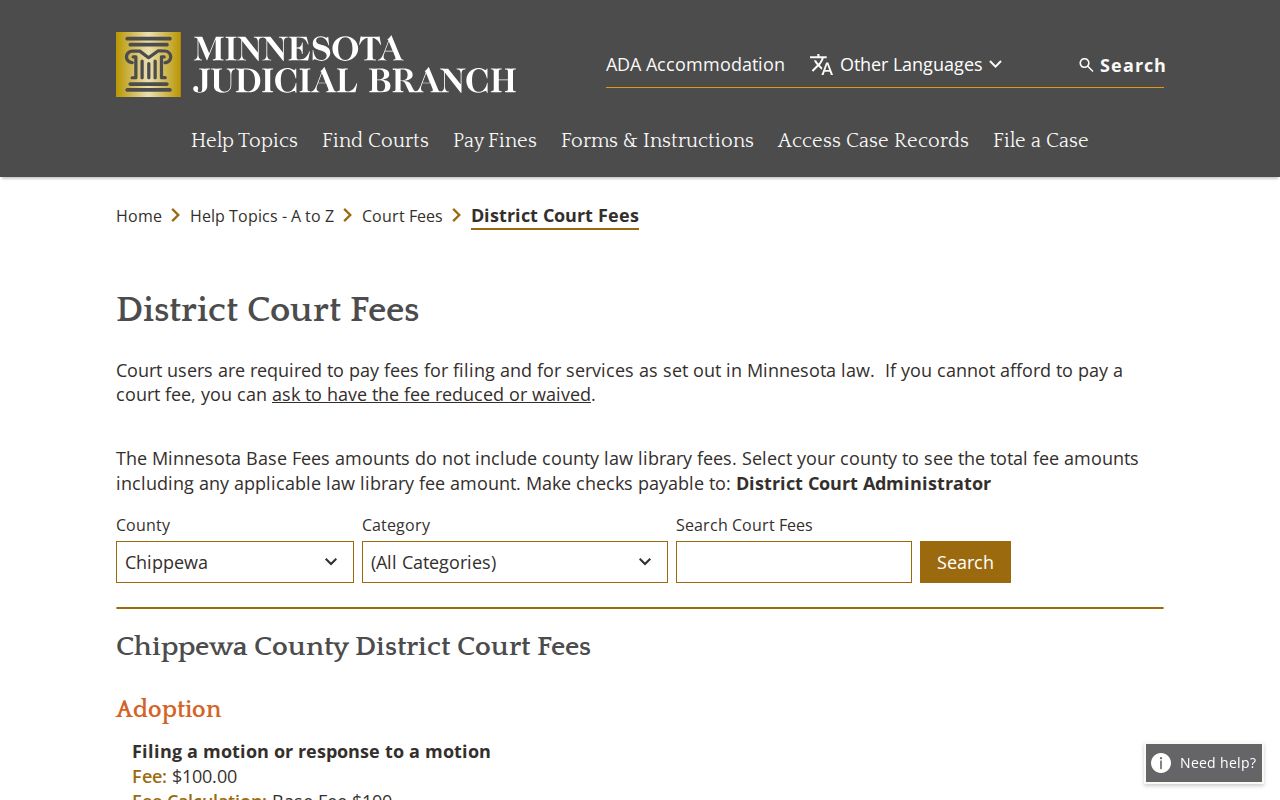
What kind of copy do you need? A plain uncertified printout of a public record serves one purpose, and a court-certified or exemplified version serves another.
Hearings on the Civil Docket
Civil hearings in Chippewa County need two tools. MCRO Case Details and the local Daily Calendar each give you half the picture. Case Details ties upcoming and past hearings to the case itself. The calendar is only a day-by-day schedule. It is not a filing history and it records no outcome. So a settlement conference, default hearing, motion hearing, or conciliation hearing on the civil docket means little by itself. Read what came after it. Check how the case resolved.
Dates shift. A continuance or a cancellation can remake the whole schedule overnight. Pull the fresh daily calendar and confirm anything that matters with court administration or your attorney. The Chippewa County court schedule page walks through the same local process.
Note: A judgment amount and a later satisfaction or payment entry may not match. Check both before you conclude anything about a civil court record.
Chippewa County Civil Request Routes
Not every civil file lives on a screen. Visit the counter at Chippewa County District Court. You can also use a public terminal at any Minnesota courthouse. To ask about copy fees, certification, or where a file sits, call court administration at (320) 269-7774 or fax (320) 269-7733. The courthouse sits at 629 North 11th Street, Montevideo, MN 56265.
Minnesota also runs a statewide copy-request process. It works in person, by mail, online, or through the statewide copy-request process and eFile. Tell the court the county and the case number. Name the document or event you want, the date range, how many copies, and your preferred format. Attorneys and other covered filers handle filings through Minnesota eFile and eServe. Self-represented parties can opt in. They do not have to. Keep in mind that eFS sends filings and serves papers, so it is no stand-in for MCRO. Chippewa County offers no special civil-docket mailbox or subscription for these requests.
Chippewa County District Court Administration
629 North 11th Street
Montevideo, MN 56265
Phone: (320) 269-7774
Fax: (320) 269-7733
Contact the court for a public file, a copy request, certification, or a record not available through remote access.
Who Can See Civil Dockets
Access to a Minnesota court docket starts with the Minnesota Judicial Branch Rules of Public Access. Rule 4 treats court records as open by default. A record stays closed only when another rule, a statute, a court order, or some other authority says so. Rule 8 then splits the questions apart, since inspecting a record, copying it, getting it in bulk, and reaching it remotely are four different things under the rules. So even if a case is missing from MCRO, that alone does not decide whether you can walk in and view the civil docket at the courthouse.
Public-access points:
Public Access Rules 4, 7, 8, and 9 address availability, sufficiently specific requests, access methods, and review of a denial.
Minnesota Statutes section 13.03 supports public inspection and a copy-cost framework where applicable.
CON100/CON101 is the formal route to request access to a confidential or sealed court record.
Minnesota’s public-data statute supplies the source illustration for the civil record-access framework.
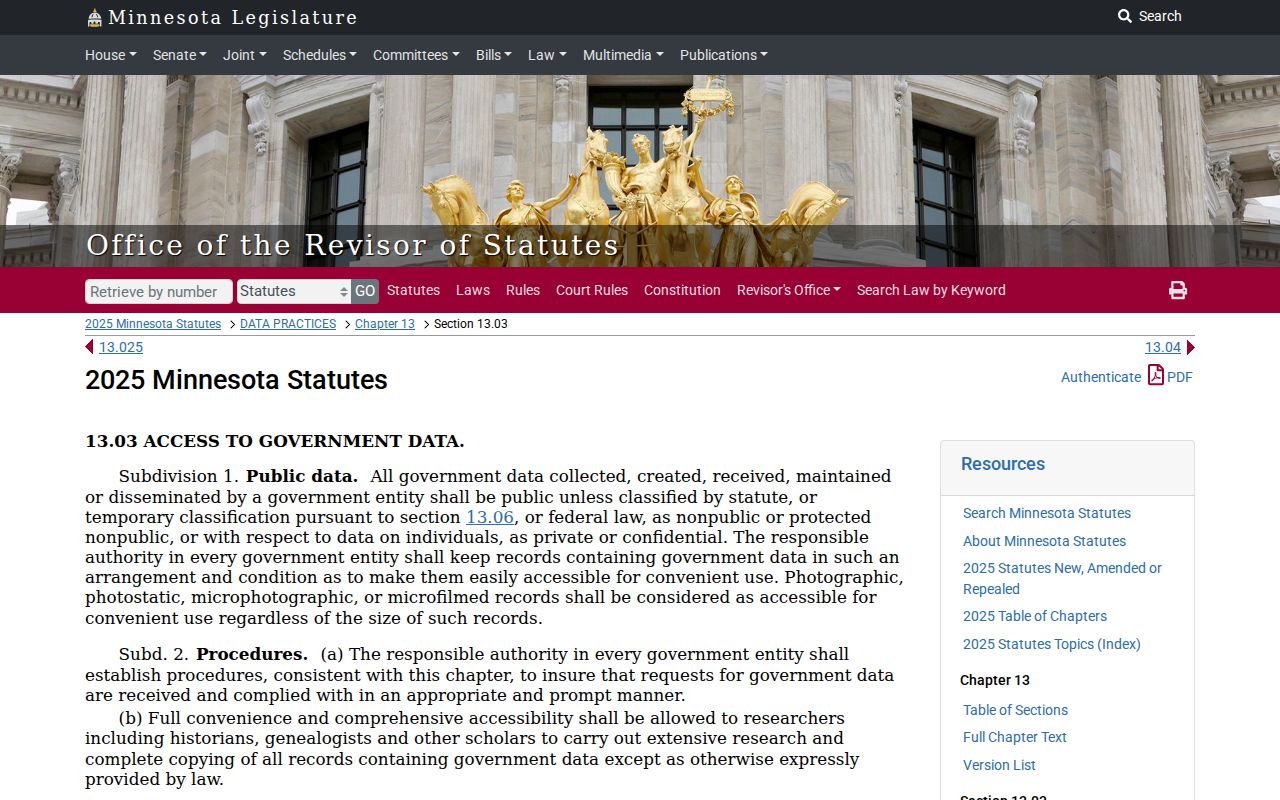
Name the exact record you want and the format you need it in. Court administration can point you to the right request path for that civil docket, though staff cannot give legal advice on the underlying dispute.