
Chippewa County Court Docket Searches
For a Chippewa County court docket search, start with Minnesota Court Records Online, or MCRO. The county runs no docket database of its own. This statewide system is the public entry point. Pick the specific-county location option and choose Chippewa. You can search by Name, Case Number, Citation Number, or Attorney. A full case number works best. Without one, enter the exact last and first name. Then narrow the docket results by county, date, category, or status as details allow.
Read empty results with care. A miss may simply mean a spelling variant, a citation filed days ago, or a restricted record. It could be an older file. It could also be a category with limited remote access. None of that means the person has no case in Chippewa County. Pair any case lookup with the daily hearing calendar for a current setting. Need a certified record, or a file that is not online? Call Chippewa County District Court administration.
- Open MCRO Case Search and choose Chippewa from the specific county locations.
- Search by complete case number, citation number, attorney, or the narrowest reliable name fields.
- Open Case Details and read the case type, events, hearings, status, and disposition separately.
- Use the official daily calendar to confirm a scheduled hearing's date, time, location, and connection type.
- Request a copy from court administration when an official, certified, older, or restricted record is needed.
MCRO for Chippewa County Cases
MCRO Case Search is the statewide layer that holds Chippewa County District Court records. A name search accepts a trailing asterisk after at least two characters. A separate Sounds Like option catches near-matches. The two methods cannot be combined. Dates go in month, day, and year format. Searching statewide helps when a party has court records in several counties. Choosing Chippewa cuts down false matches on the docket.
The case-search screen finds the case record. It does not replace the clerk's custody of the official file. The official MCRO Case Search page shows the public interface that leads to case information.
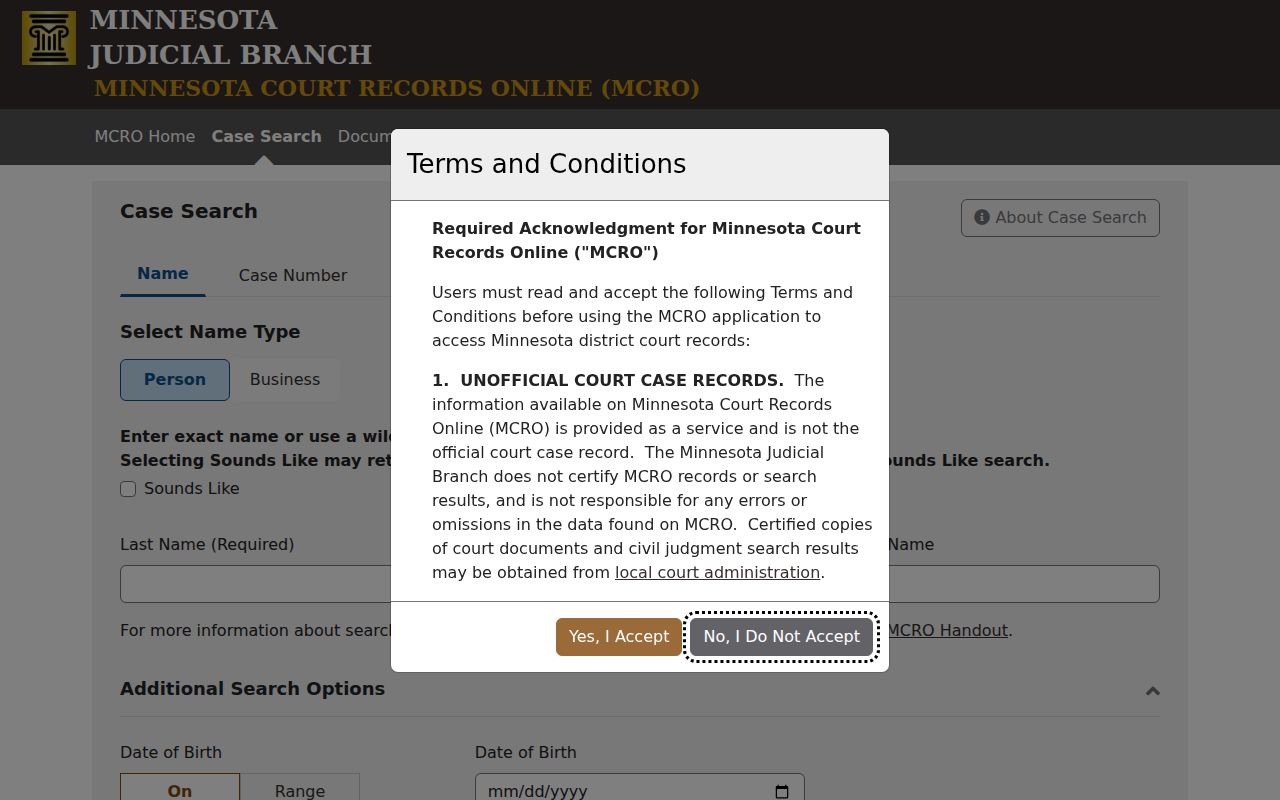
Use the county selector and the most reliable identifier before broadening a name search.
| Search field | Best use | Chippewa note |
|---|---|---|
| Name | Known public civil, probate, family, or eligible case information | Pending criminal matters have a name-search limitation. |
| Case Number | Direct case lookup | Observed Chippewa examples begin with county code 12. |
| Citation Number | New traffic or violation matter | A citation number may come before a court case number. |
| Attorney | Public case lookup by counsel | Use the attorney or bar-number option where available. |
Court Dockets: What They Show
Minnesota names its chronological case-event record a Register of Actions. In MCRO, Case Details arrive in layers. The overview may list upcoming hearings and financial amounts. Case Information carries the case number, title, type, filing date, venue, judicial officer, status, citation number, flags, and related cases. The event list runs reverse chronological, so the newest entry often appears first.
Know what a docket entry does not tell you. A hearing is a scheduled event, not an outcome. A charge is not a conviction. A case marked Closed may still hold a judgment, satisfaction, or financial entry needing separate review. The View Document control appears only when a public document exists, and it never promises every filing is online.
| Case Number | The court-assigned identifier, with 12 in observed Chippewa County examples. |
|---|---|
| Case Events | Docketed filings, notices, orders, and hearing results, usually in reverse chronological order. |
| Hearings | Upcoming and prior settings, with date, time, location, officer, and type. |
| Disposition | The recorded outcome, such as dismissal, settlement, judgment, plea, or sentencing. |
| Financial Information | Fines, fees, payments, credits, or monetary information where displayed. |
Chippewa County Case Number Clues
Every Chippewa County case number begins with county code 12. Formats seen in official court material include 12-CR-26-____ for a criminal matter. Payable violations show as 12-VB-25-____. Probate uses 12-PR-26-____, family 12-FA-26-____, and civil 12-CO-26-____. The type code and the citation number answer different questions. Treat them as distinct.
Type the full number, hyphens included, whenever you have it. Know only a citation? Use the citation route in MCRO. Or use the Court Payment Center for eligible payable matters. A new citation can take up to seven days to appear after issuance. A number format helps pick a search route. It says nothing about a case's outcome or its public availability.
Chippewa County Courts and Their Dockets
Chippewa County District Court is part of Minnesota's Eighth Judicial District. It handles local civil, criminal, family, probate, juvenile, traffic, and related matters. Conciliation Court sits inside the district court. It has no separate courthouse. Its docket routes stay separate from the appellate and federal systems. One dispute can still touch several courts at once.
A city clerk or the County Recorder may keep city-government, land, or vital records. Neither office normally holds a district-court Register of Actions. Match the record type to the right court level. The search route stays clear.
| Court or division | Docket covers | Where to search |
|---|---|---|
| Chippewa County District Court | Civil, criminal, traffic, family, probate, juvenile | MCRO, public terminal, or court administration |
| Conciliation Court | Eligible small-claims matters | MCRO and the district-court file |
| Minnesota Court of Appeals | Eligible district-court appeals | Minnesota appellate access, not a county MCRO search |
| U.S. District Court, District of Minnesota | Separate federal cases | CM/ECF and PACER, not MCRO |
Chippewa County Calendar Fields
The official Chippewa daily calendar lists hearings, not case history. It usually posts around 7:00 a.m. on business days. Updates come hourly. The schedule can still change. Columns cover Party Name, Hearing Location, Hearing Date, Time, Judicial Officer, Hearing Type, Connection Type, and Case Number.
Read the time alongside the connection type and location. A Motion Hearing, Bail Hearing, Pre-trial, Conciliation Hearing, or Settlement Conference names the kind of setting. It is never the result. Printed calendars outside courtrooms or in public lobbies are called the most current local version. If a matter you expect is missing, confidentiality, remote-access limits, an update, or a rescheduled date may explain it. The Chippewa County court page is the official local source for this calendar route.
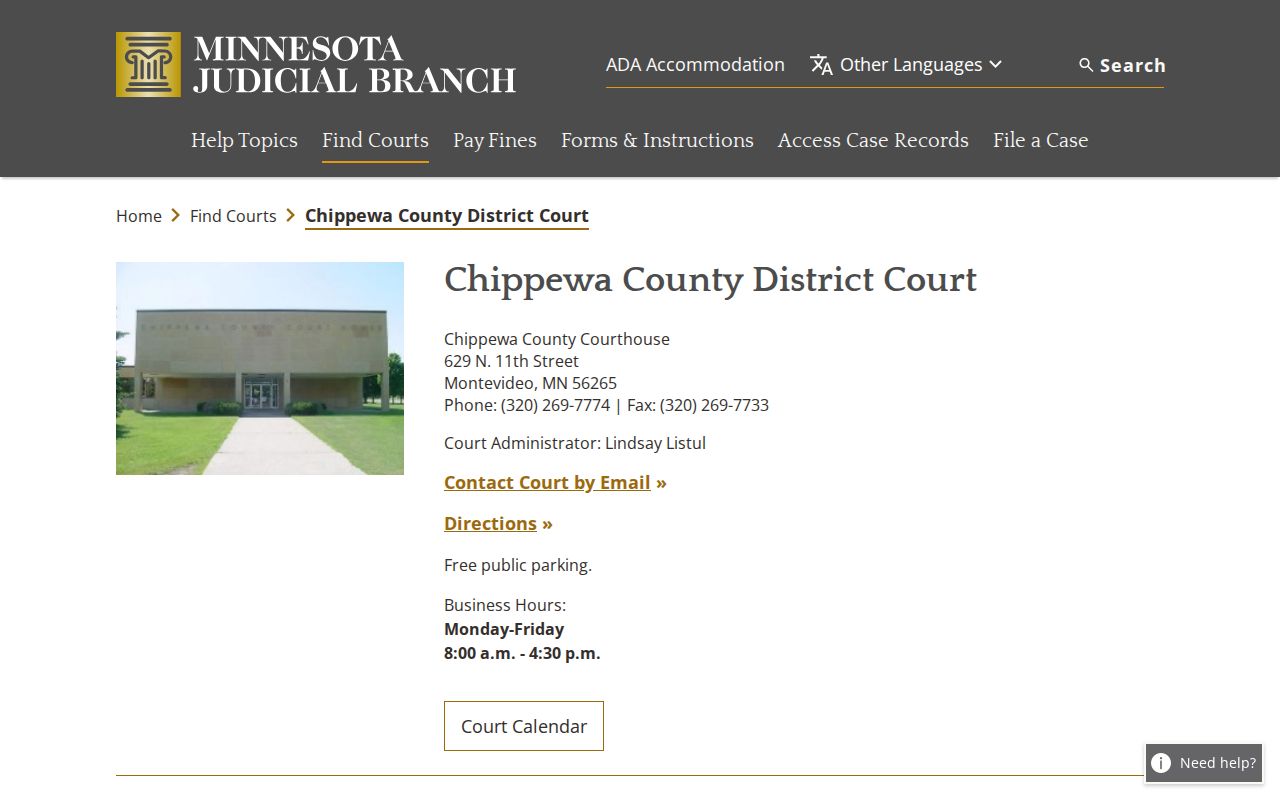
Confirm any material calendar change with court administration rather than trusting a saved PDF.
Court Dates and Settings in Chippewa County
Two tools carry the load here. The daily calendar shows the next scheduled event. MCRO Case Details lays out the fuller history of a Chippewa County case. A calendar entry might list the hearing location and a courtroom reference such as Courtroom 2nd Floor. The judicial officer may appear too. So may how the hearing connects. Case Details adds the prior hearings and case events behind the setting. Keep one caution in mind. An initial appearance or a probation violation hearing is a step in the process. It is not a finding of guilt or a final sanction.
When a Chippewa County court date is missing, shifting, or unclear, call court administration at (320) 269-7774. Staff can pull up the right case file and confirm the current court route. They cannot give legal advice. The Chippewa County court schedule page walks through daily-calendar use and common setting terms in more depth.
Chippewa County Access Layers
Think of access as separate layers. MCRO is the remote public interface for a Chippewa County docket search. Public terminals at any Minnesota courthouse, or at the State Law Library, open another route. That helps when remote options run narrower. Chippewa County District Court administration answers local records questions. It handles certified copies, and it gives definitive word on file status. Appropriate mail requests can go through a statewide copy request or a clear letter.
Sealed or confidential material is different. The CON100/CON101 request packet asks for the county, the file number if known, the district, the case type, the requester's interest, the specific records, and the reason for access. Adoption records use separate forms. The court offers no public docket email or subscription service for Chippewa County.
For public documents tied to a known case number, the official MCRO Document Search page is where they live.
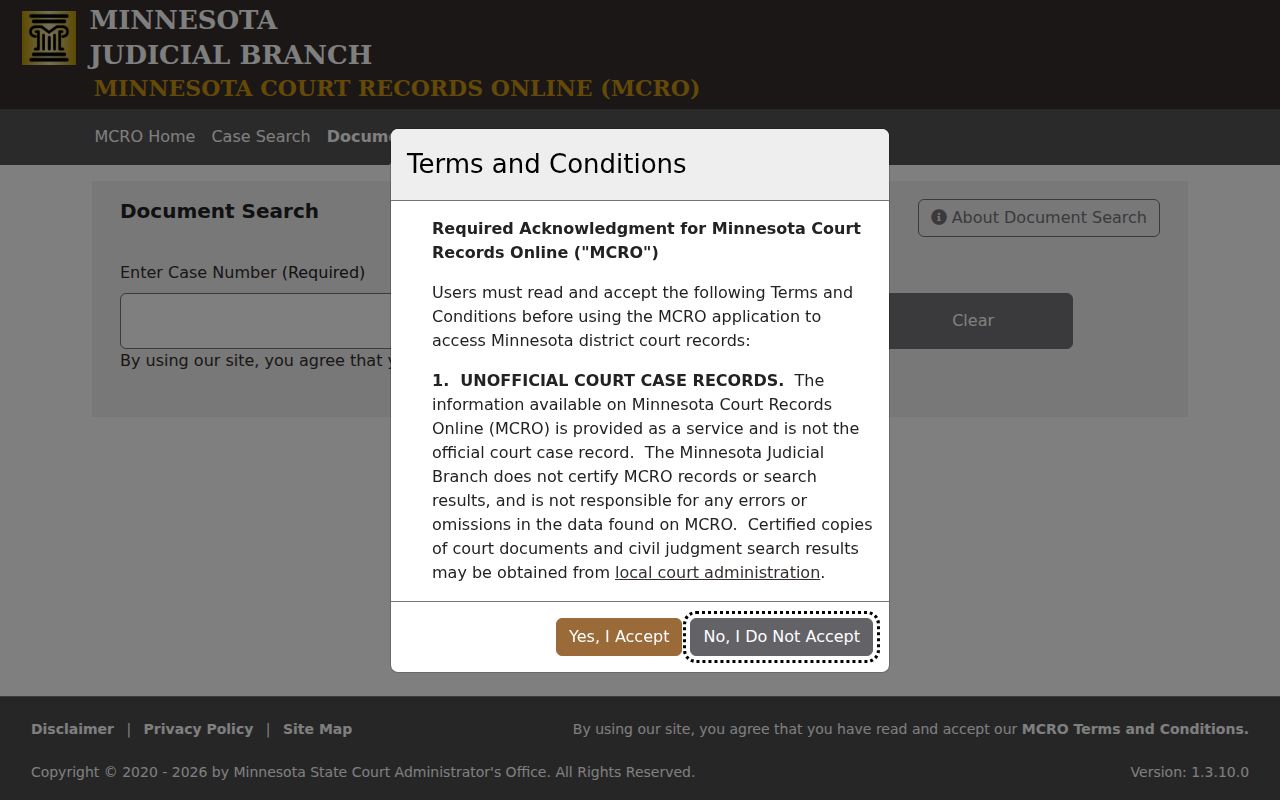
A Document Search needs a case number, and it returns only the public documents tied to that one case.
Docket Access Under Minnesota Law
Access to Chippewa County court records starts with the Minnesota Judicial Branch Rules of Public Access to Records. Rule 4 makes judicial-branch records generally open. That holds unless a rule, statute, order, or other authority restricts them. Rule 8 then separates inspection, copying, distribution, and remote access. That split matters. A record can be open for inspection at the courthouse. It may still be absent from remote search results.
The restrictions reach juvenile, adoption, confidential name-change, domestic-abuse, harassment, family, and sealed material. An empty MCRO result proves nothing about expungement or sealing. So treat it as just that: no result. Frame any request around the specific record and the office that holds it, not a generic privacy explanation.
Key rules for Chippewa County records:
Public Access Rule 4 sets the general rule of accessibility for judicial-branch records.
Public Access Rule 8 separates remote access from courthouse inspection and copying.
Minnesota Statutes §13.03 addresses public-data inspection and copy-cost rules where applicable.
Minnesota Statutes §260B.171 provides special confidentiality boundaries for juvenile records.
Chippewa County Court Records Fees
A free electronic public copy and a court-certified record are two different products. The local district-court fee table prices an uncertified copy, printout, scan, or screen print at $0. Certification costs $14. An exemplified plus certified copy runs $28. Reports, scanning, fax service, judgment searches, and filing each carry their own listed charges. Confirm the live amount and payment method before sending money, because fees can change.
The fee page also gives practical details. Checks go payable to District Court Administrator. Base fees exclude county law-library fees, and a fee waiver may be available. Staff can also tell you whether a requested file sits offsite. That affects how soon a copy can be produced. The Chippewa's official district-court fee table page posts the current local amounts.
Check the current fee table to tell a free public view apart from a request that requires paid certification.
| Copy type | Listed amount | Use |
|---|---|---|
| Uncertified | $0 | Ordinary public copy or printout |
| Certified | $14 | Court-authenticated copy |
| Exemplified plus certified | $28 | Additional authentication format |
How the Clerk Keeps Docket Records
Chippewa County does not list a separate county clerk of court as its court-record contact. The local office is Court administration. It is led by Court Administrator Lindsay Listul at Chippewa County District Court. That office maintains district-court case files, Registers of Actions, calendars, and the local copy-request process. The County Recorder is a different office entirely, handling land and vital records. So it is not the first stop for a court docket or a certified court copy.
Turn to court administration when a remote search comes up empty. The same goes for an older or restricted file, or when certification is needed. For a public copy request, have the case number, the document or event, the approximate date, the desired format, and a delivery preference ready. One limit applies. Court administration can identify the proper access process. But it cannot advise how a case should be handled.
Chippewa County District Court
629 North 11th Street
Montevideo, MN 56265
(320) 269-7774
Fax: (320) 269-7733
The official Chippewa court page provides the local court contact and courthouse information.
The court administration route is distinct from the county Recorder's local-government record functions.
Why the Chippewa County Recorder Differs
The Chippewa County Recorder runs real-estate and vital-record functions. That office does not keep the district court's case-event records, daily court calendar, or certification process. Its courthouse drop box is not a district-court docket or copy-request channel either. Send a record request to whichever office actually holds that record.
The distinction shows up fast in practice. A property document, a birth or death record, and a court case each lead somewhere different. The record type controls the route. A Register of Actions, a judgment, a hearing setting, or a court-file copy belongs with the district court system. The Chippewa County Recorder information page lays out what that separate Recorder function covers.
The Recorder is well worth knowing for its own records. It is still the wrong desk for a court docket.
Chippewa County Court Access History
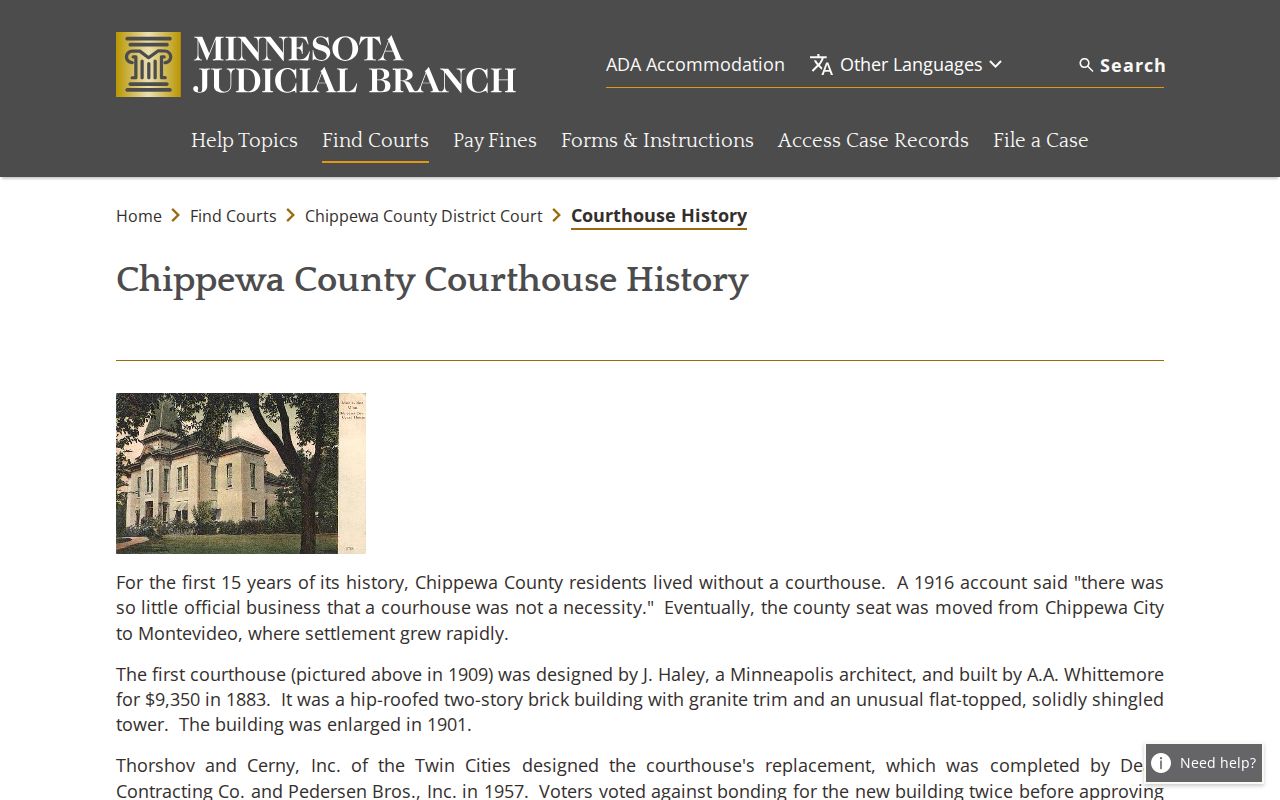
Chippewa County's courthouses tell one story, and its online access tells another. For its first fifteen years, the county had no courthouse at all. The seat then moved from Chippewa City to Montevideo. A brick courthouse went up there in 1883. It was enlarged in 1901. Voters turned down bond issues twice. The courthouse standing today was completed in 1957 on a ten-acre site. It has terrazzo, marble-faced walls, aluminum rails, and contrasting wood finishes in the courtrooms.
Digital access built up in layers. Minnesota eFile and eServe became mandatory for covered attorneys, government participants, and guardians ad litem in 2016. But eFS is a filing and service system, not a public case search. MCRO Document Search launched in 2021, and Case Search arrived that same year. Hearing and Judgment Search followed in 2022. MPA Remote went away in 2023. MCRO is what the public now uses for remote access to court records.
The official Chippewa courthouse history lays out the full building timeline. It runs from the 1883 structure through the 1957 courthouse and its finishes.
The local courthouse and the statewide digital tools now work as complementary access routes.
Chippewa County Community Court Context
Not every court-connected program is its own docket. Chippewa County joins Lac qui Parle, Swift, and Yellow Medicine Counties in 6W Community Corrections. That is a joint-powers organization. The county credits 6W with court-ordered and Department of Corrections supervision for adults and juveniles. It also handles diversion, investigations, cognitive-skills programming, and domestic-violence education. Supervision information can stay restricted even when the underlying district-court case is public.
The local court page also links services. These include language access, parenting education, jury information, remote hearings, fees, the law library, and early neutral evaluation. Those resources help with a court matter, but none is a public docket database.
Chippewa County's 6W Community Corrections page describes the regional program and what it covers.
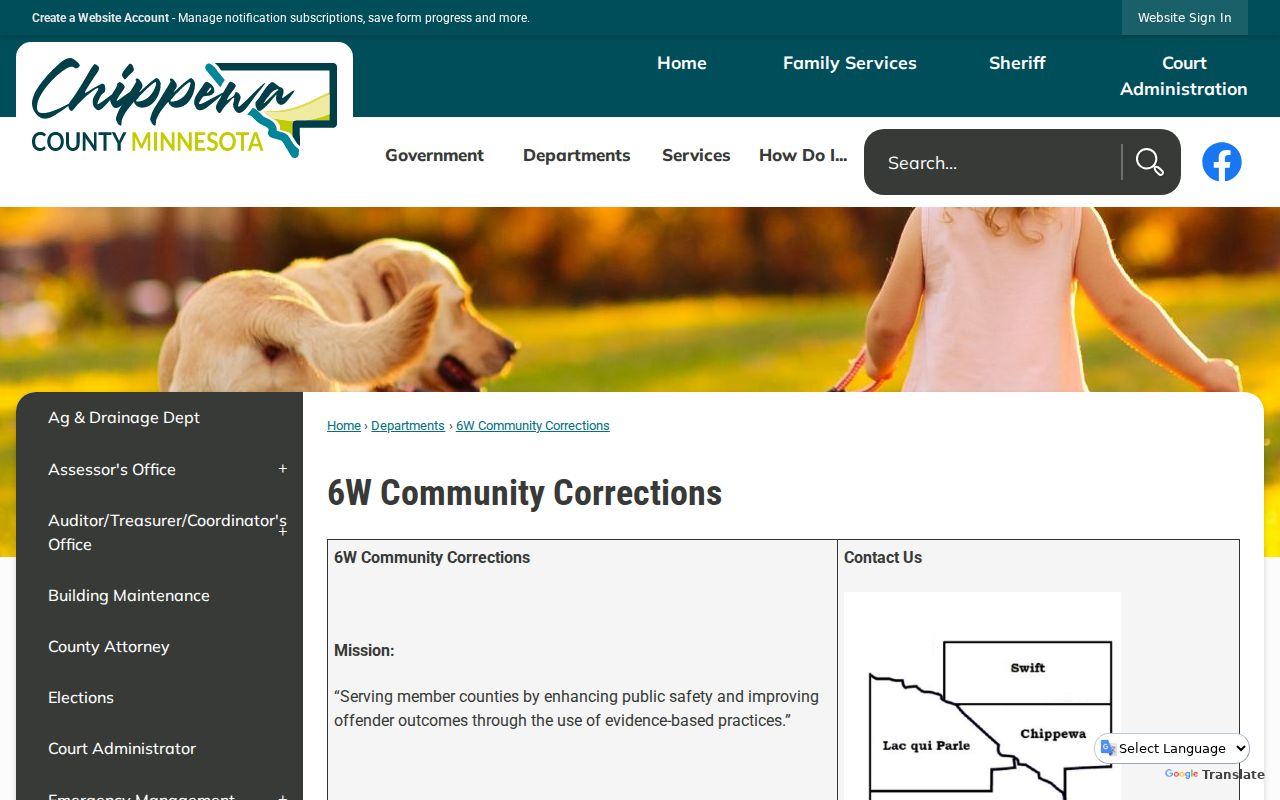
For the case itself, use the district-court record. For a program-routing question, ask the responsible agency.
City-by-City Court Dockets in Chippewa County
The 2020 Census table lists the five largest incorporated places tied to Chippewa County. They are Montevideo, Granite Falls, Clara City, Milan, and Maynard. None of these cities runs its own municipal docket portal. State district-court questions route to MCRO, the Chippewa daily calendar, and court administration. For ordinances and council minutes, the city clerk is the right local stop. Municipal administrative records go there too. A city clerk does not hold a state district-court Register of Actions.
Granite Falls needs an extra venue check. The incorporated city straddles Chippewa and Yellow Medicine Counties. Its total Census population is a citywide figure. That number is not a Chippewa-only count. Each city card offers local routing notes plus the shared public court search route.
Montevideo Court Records
2020 Census population: 5,398. County-seat court access center.
Granite Falls Court Records
2020 Census population: 2,737. Check Chippewa or Yellow Medicine venue.
Clara City Court Records
2020 Census population: 1,423. State cases route to Chippewa District Court.
Milan Court Records
2020 Census population: 428. City records and court files have separate custodians.
Maynard Court Records
2020 Census population: 319. Use the county and case number for state cases.
Map and Directions to the Chippewa County Courthouse
Chippewa County District Court is housed at the Chippewa County Courthouse in Montevideo, the county seat on a ten-acre site on the east side of town. The building has original jurisdiction over civil, family, probate, juvenile, criminal, and traffic matters, and the daily calendar lists hearings by courtroom on the second floor. Court Administration's counter also runs the public electronic access terminals and can pull locally stored paper files.
Chippewa County Courthouse
629 North 11th Street
Montevideo, MN 56265
(320) 269-7774
Monday-Friday, 8:00 a.m.-4:30 p.m.
Free public parking is available at the courthouse. A statewide order effective September 1, 2026 bars firearms and other weapons from court-occupied areas, so plan for screening. Lindsay Listul serves as the local ADA contact for accessibility accommodations; calling ahead at (320) 269-7774 can confirm holiday closures or accommodation needs before the trip.